Every lesson a lab learns, already in the system.
Run your tissue culture lab on the system that runs a working lab every day. Every vessel, every transfer, every check and shipment in one record, with a window for your customers on their own material.
For tissue culture labs, whether you are a standalone lab or a cultivator running tissue culture in-house.
On the bench
Start the day knowing what is due
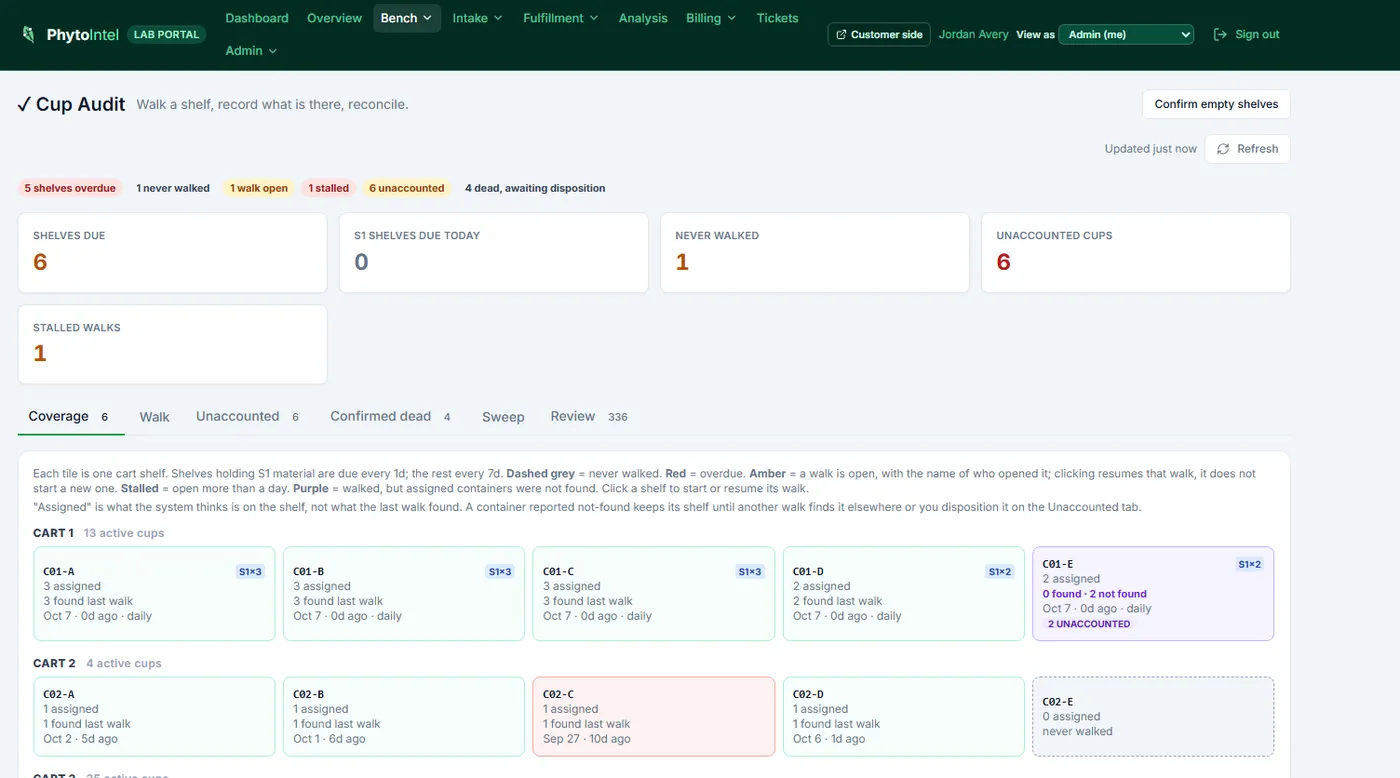
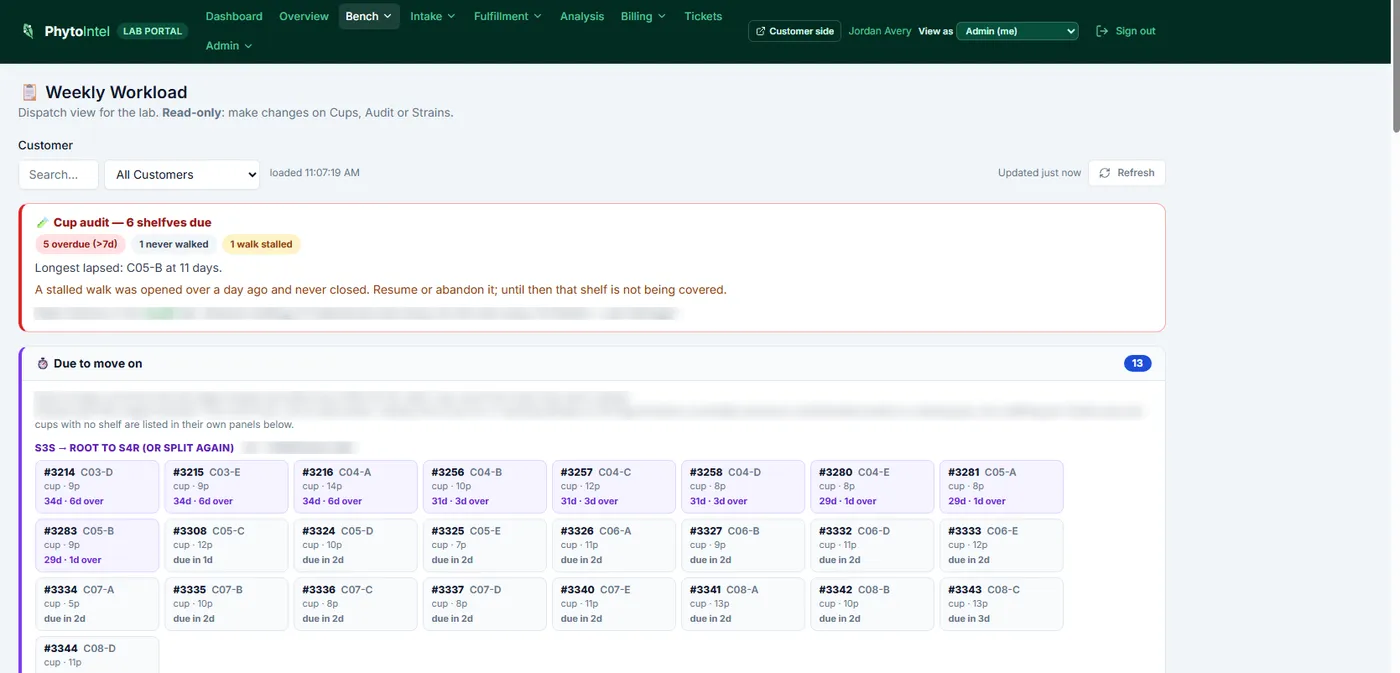
The tech opens one screen and sees the work: which cups are due to move on, which shelves are due a walk, what was flagged yesterday. Scan a label and the cup's record opens. Log a split and the new cups inherit the history. Nothing is written on a bench sheet and typed in later.
- Work by shelf, with the clock on every cup
- Shelf walks that reconcile what the system thinks is there with what the tech finds
- Splits, moves and contamination checks in a few taps
Every vessel has a record
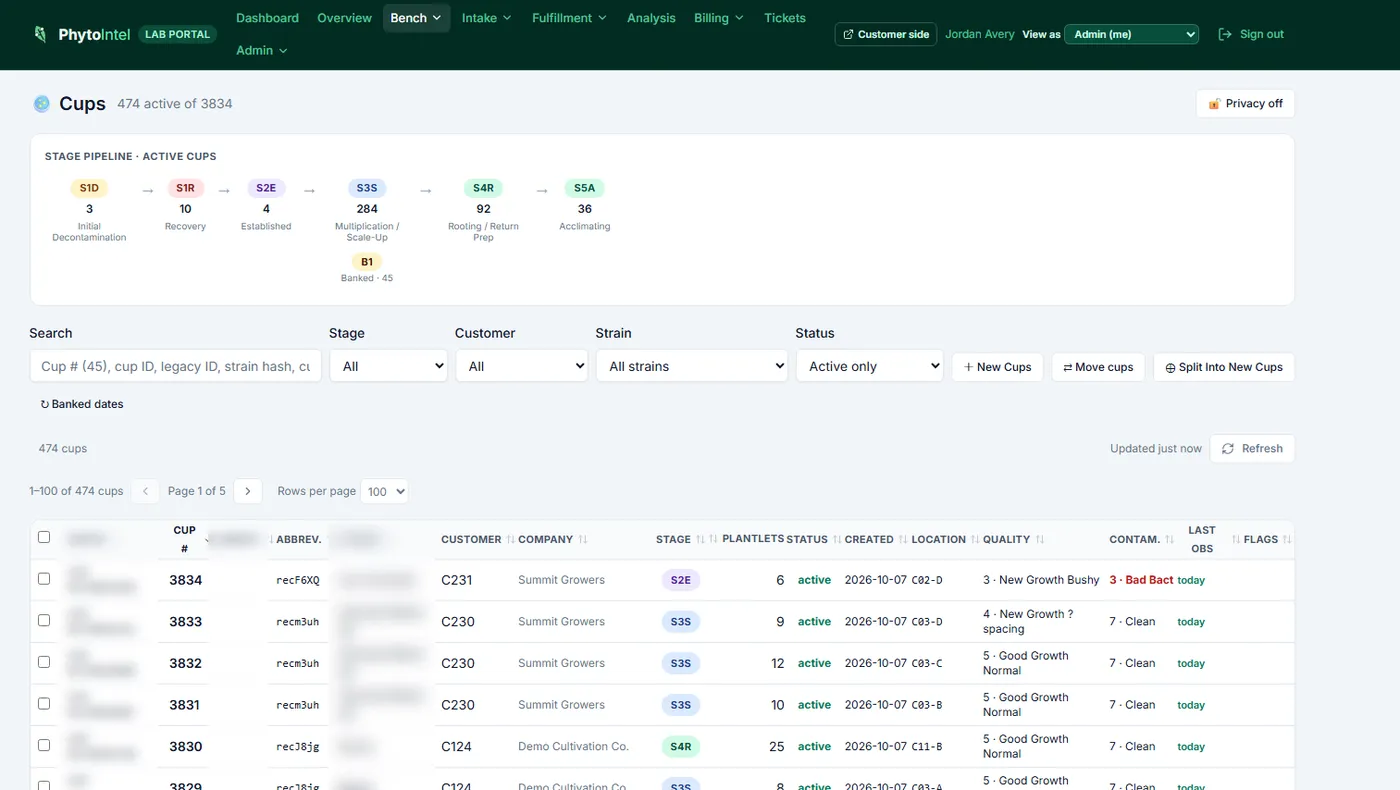
Stage, plantlet count, shelf, quality at the last check, contamination at the last check, when it was last seen. The pipeline across the top is the lab in one line. A cup that goes missing on a walk stays on the books until someone finds it or writes it off, so counts are counts.
Running the lab
The questions a lab owner asks every morning
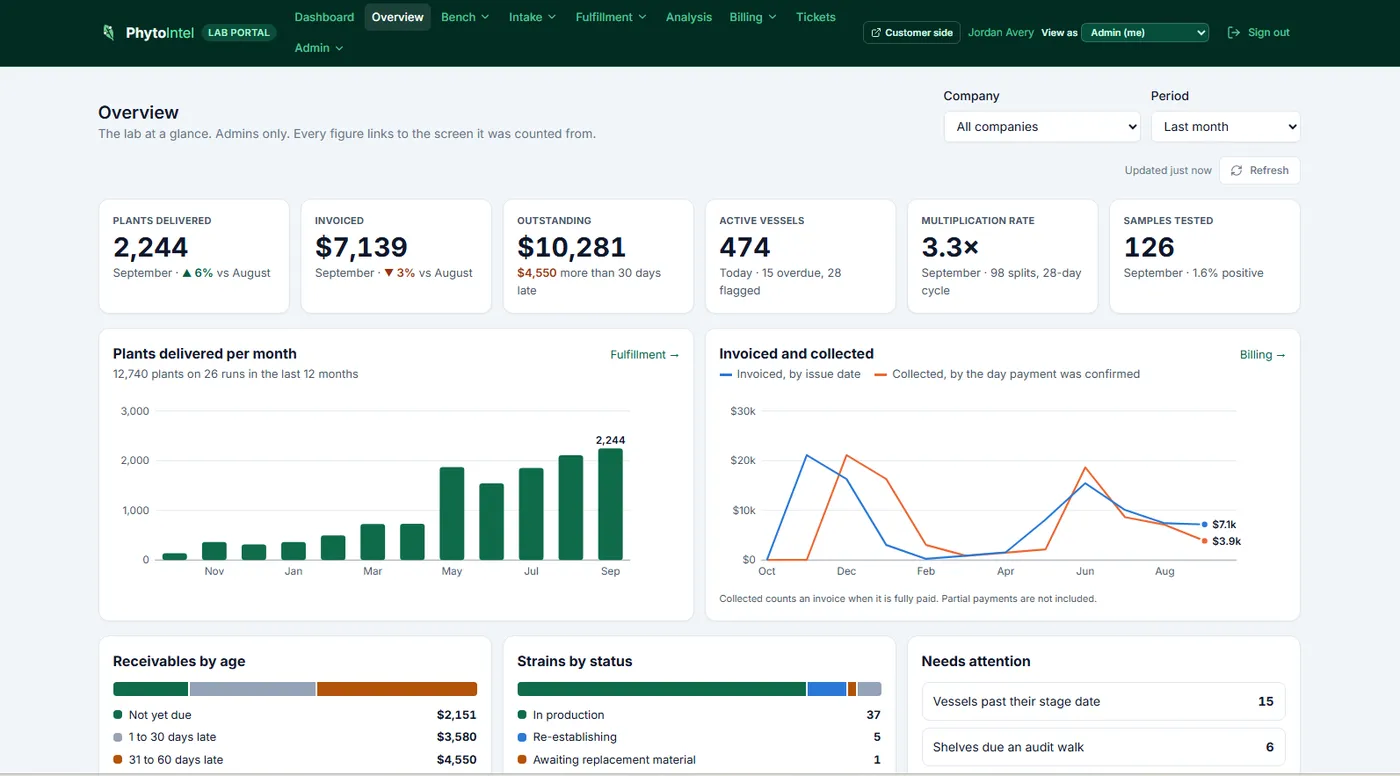
How many plants went out this month, and was that up or down. What is invoiced and what is collected. Which strains are in production, which are waiting on material, which keep failing. What needs attention today, with each line opening the screen where it is handled.
- Delivered, invoiced, outstanding, active vessels, multiplication rate
- Receivables by age and strains by status
- Every figure links to the record it was counted from
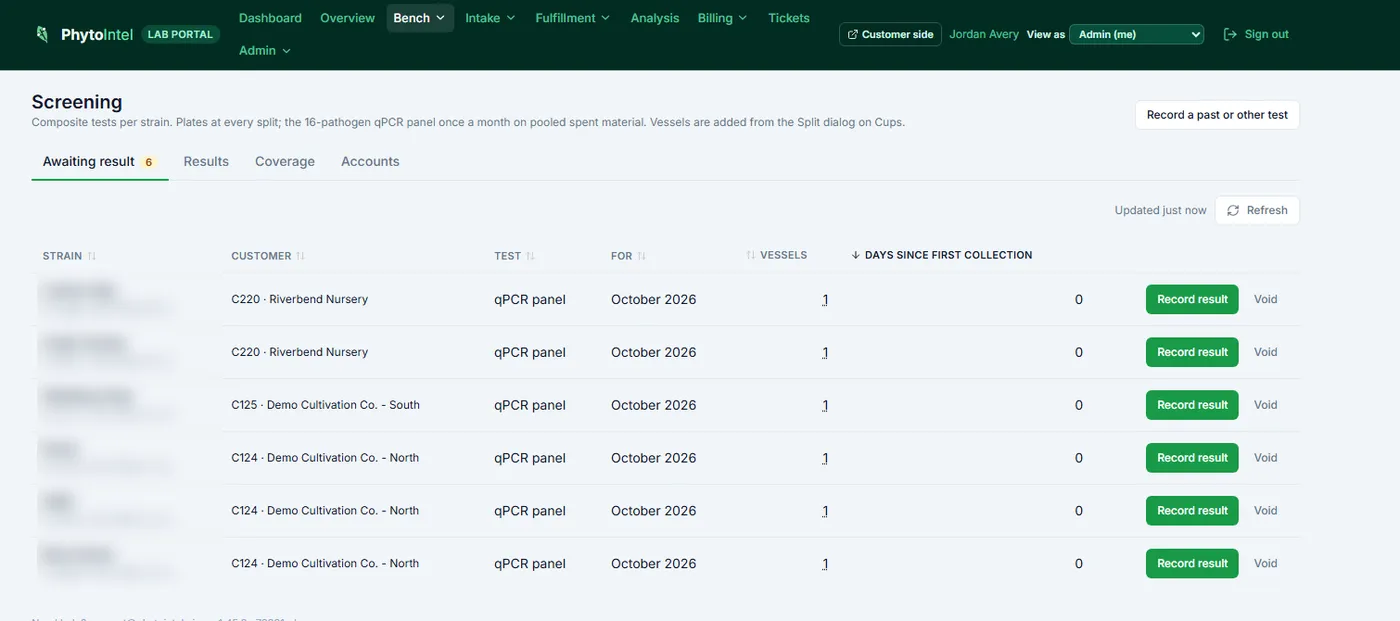
Testing is part of the record
Plates at every split and a pathogen panel on a schedule, tracked per strain, so a result is never a PDF in an inbox. When a result comes in it lands on the strain, the customer sees it, and the vessels it covers are known.
Your customers
Three people at the same company, three different mornings
The company admin sees invoices and approvals. The site manager sees what is arriving and which mothers not to cull yet. The operator at the site sees deliveries and test results, and nothing about money. Same record, three views. If you are a cultivator running tissue culture in-house, your customers are your own sites.
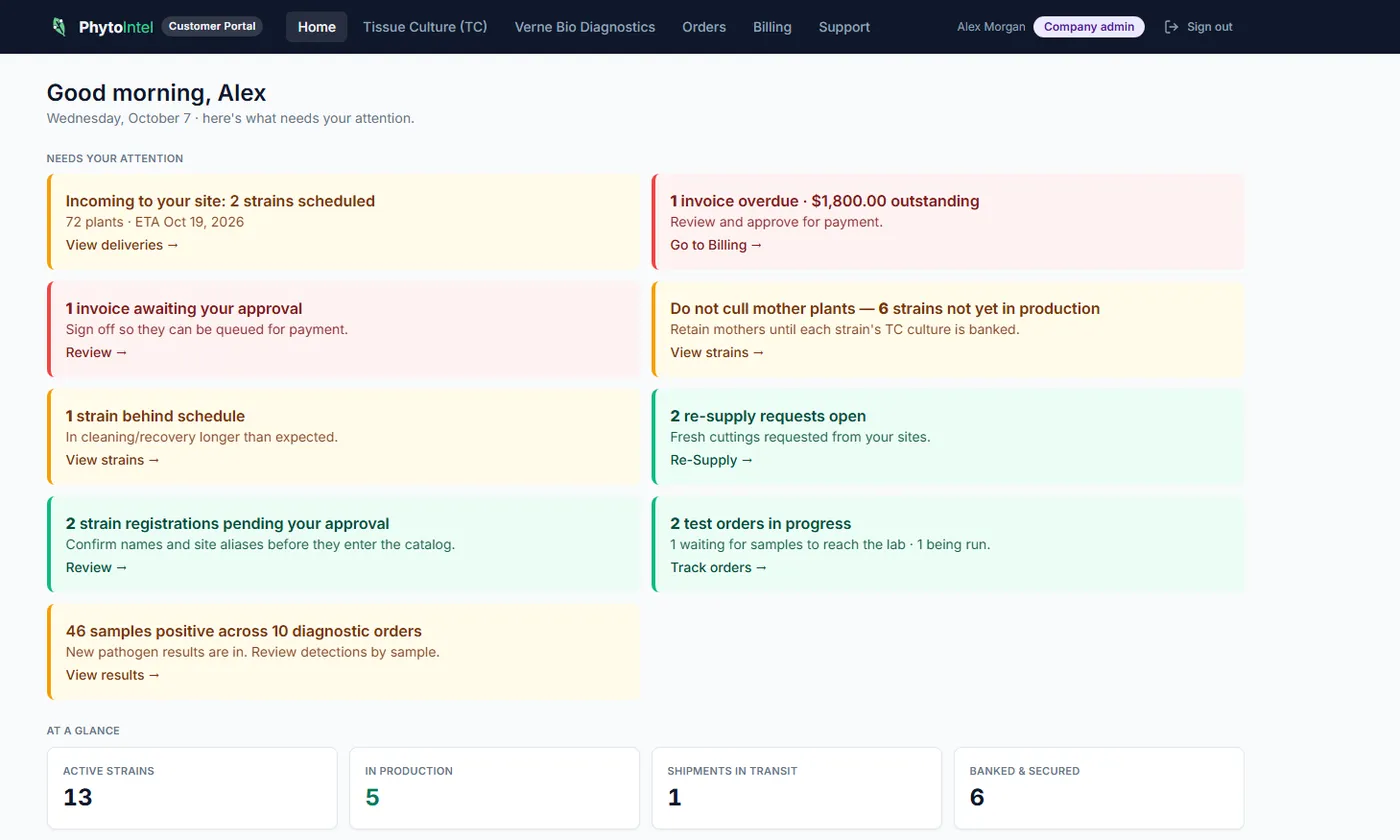
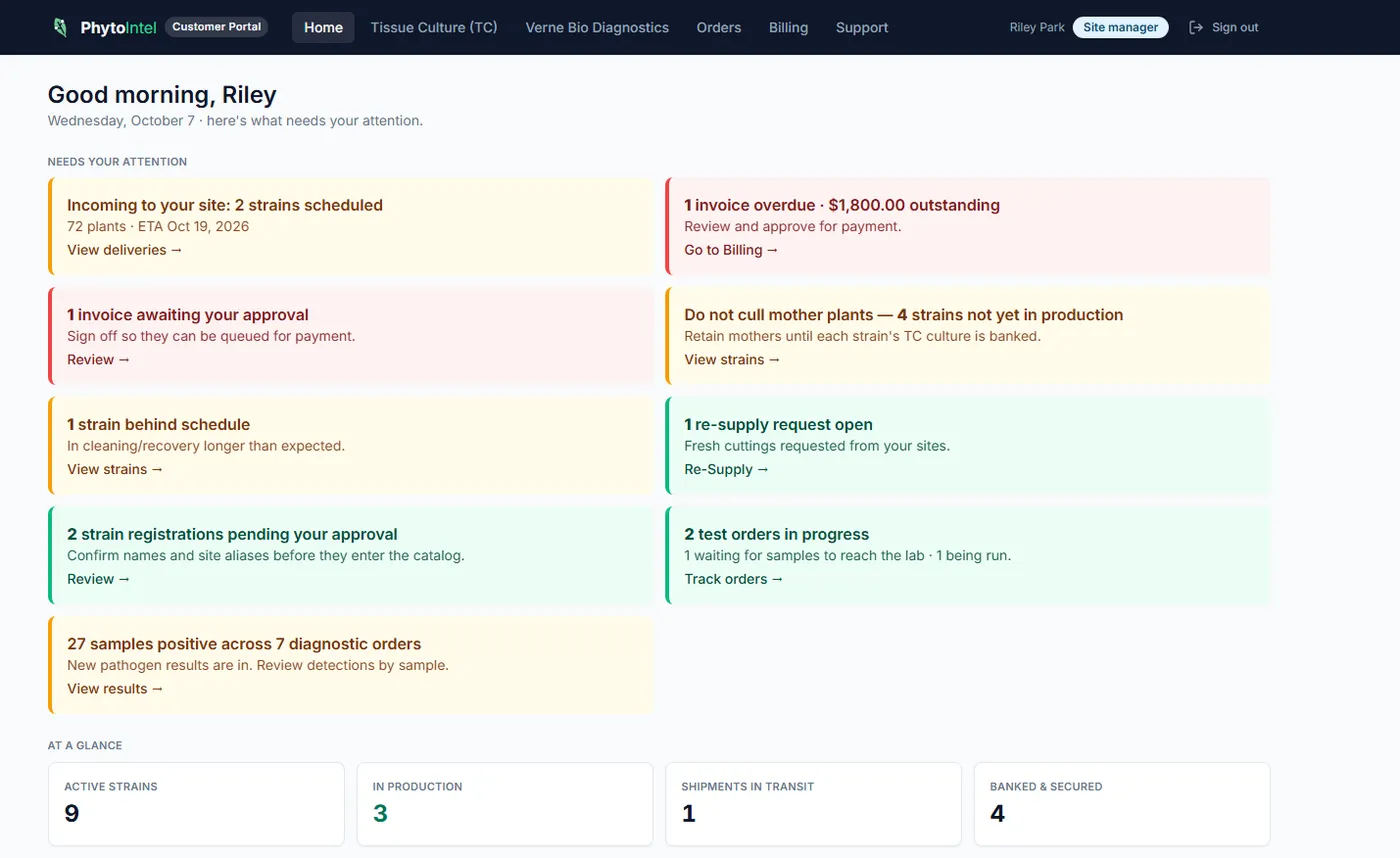
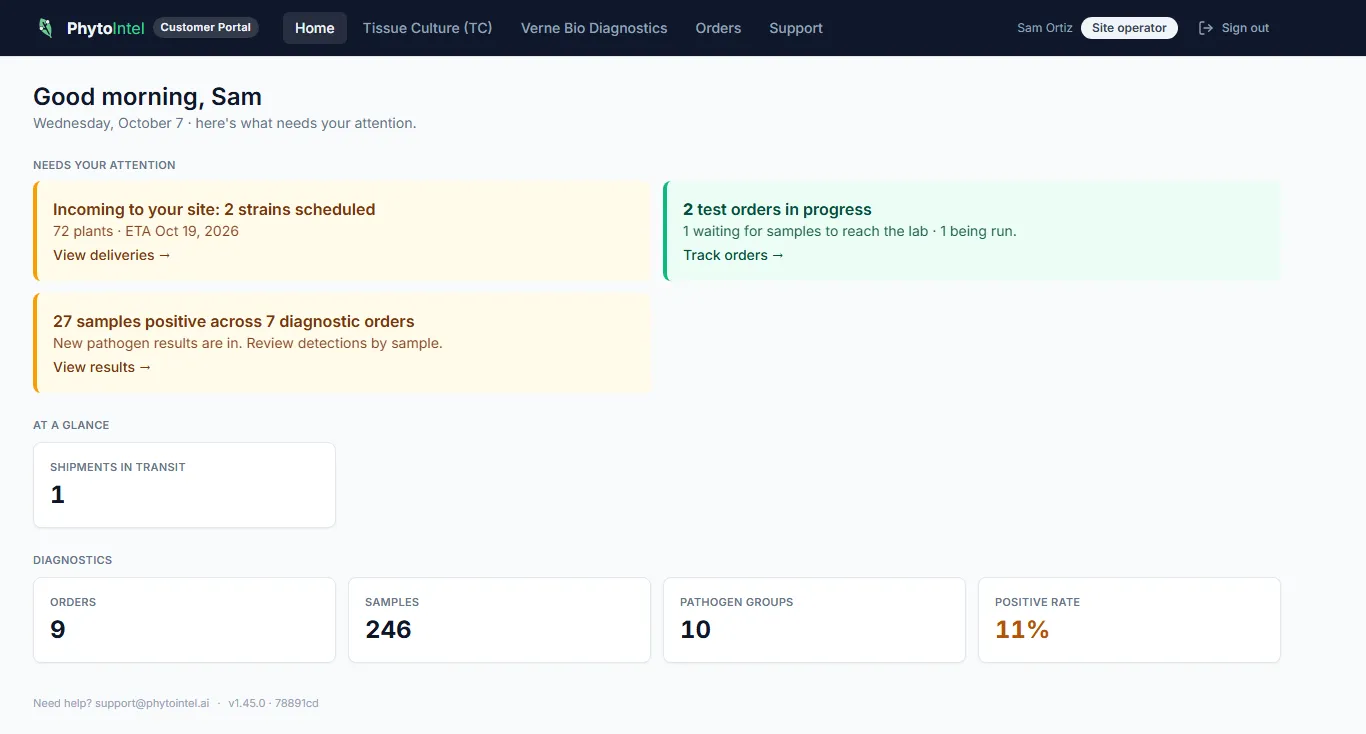
- Every strain, its stage and its status
- Test results with an email the moment they are ready
- Return requests, delivery scheduling, invoices and payment
- Support tickets routed to the lab or to PhytoIntel
A record you can ask questions of
That is why intelligence is in the name. A logbook stores what happened. PhytoIntel keeps the record so the lab can read it back: which strains are behind, which lines keep failing, how long each stage really takes, and how this month's contamination rate compares with last month's.
The overview answers the questions a lab owner asks every morning. The record underneath is built so there will be more answers as it grows.
It runs a lab every day
PhytoIntel runs Verne Bio, a molecular diagnostics and plant tissue culture lab in Massachusetts, in production. Every rule in the software was tested on that bench.
How labs get it
Your own instance
Each lab runs on its own hosted installation with its own database. Nothing is shared between labs. Your branding, your sending address, your QuickBooks.
Your data stays yours
A lab owns its records and can export them at any time. We look at your data only to fix a problem you ask us to fix. Pooled benchmarks across labs happen only with consent, and only as counts.
Support that knows the bench
Software questions come to PhytoIntel. Lab questions stay with your lab. The person on the other end has run a tissue culture lab, so you will not have to explain what a split is.
We are taking on a small number of labs. Pricing is set by lab size and quoted after a scoping call.
Who runs it
Nathan Johnson, Founder and CEO, holds a PhD in bioinformatics and computational biology from Worcester Polytechnic Institute. Before Verne Bio he worked in computational biology for preclinical oncology at Dana-Farber Cancer Institute, Harvard Medical School and H3 Biomedicine.
PhytoIntel is now offered to other labs.
See it running
Tell us about your lab: how many strains, how many people, and what you use today. We will show you the system on a real workload and reply within one business day.
All screens on this page show demo data. Every name and number is invented.